(This small literary piece is pure fiction and for the benefit of traditional gothic horror friends, following the original style of the era. Some expressions may look odd to the casual reader but author could not be happier if that leads into some research. Baroque style music is strongly recommended to accompany and perfect the reading experience. This story is also available free in e-book formats in https://www.smashwords.com/books/view/236327)
~~~~~
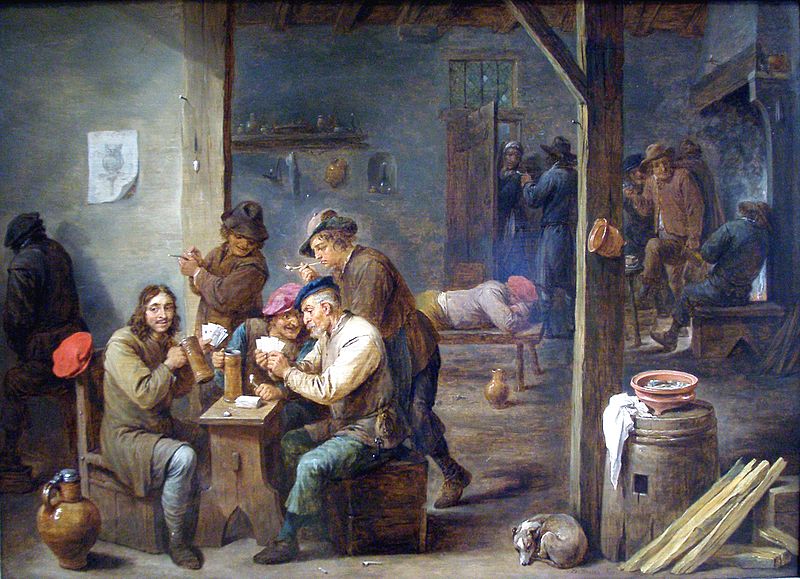
Mark my words, there is no better moment for tales than during a stormy autumn evening in ‘Joseph&Quill’, a little known inn a few miles north of coastal Dutreath and west of Borough of Helleston; closer to the coast where less known Dutreath mercifully conveys those maritime travelers, who did not take refuge of Penzance or Porthleven, from the malevolent breakers exploding against Cornish cliffs. Yet the inn resides in its solitude within boundary of greenish pastoral inland. Though, should you take lodging from inn’s upstairs, you could have a narrow glimpse of exposed and rocky coast, ravaged by sea and furious winds. Most of the travelers arrive at dark and thus do not pay attention to inn’s surroundings; they may pay attention to its Jacobean architecture. Yet it could be reminiscent of Elizabethan times, a century before coach lanes were created to occupy these places with travelers. Only those who take their leave during daylight will notice it’s heavily weathered and half-timbered walls with white nogging, or perhaps even wattle and daub; steeply pitched gables and large chimney against the dark grey clouds running background, creating the essence of the premises even more gloomy; and if the sun ever blesses this place with divine beams, I dare say the eyes of any beholder would still exclude ‘Joseph&Quill’ from the otherwise beautiful scenery. But travelers are nevertheless grateful as they spring from their coach through usually dark, windy and damp weather towards the door, around which the inviting and warm light is flickering through the mullioned windows. Enter the visitor and he will find the hearth performing its duty as the fire echoes crackling it’s warmth; fortuitous ones will enter into savour of fresh stew. Several parties occupy the tables: travelers having a meal or a just tankard or snifter to warm up and encourage any subjects; everyday gossiping, taxation, war, hunting, weather and foreign lands. The deepening cold and darkness is well kept outside, except when some hapless traveller opens the door, entering the refuge or leaving it, surrendering himself to the mercy of incoming winter. Sitting here in warm and totally isolated from cold and dark, I now shall grant you the world of some of these good people who occupy the tavern part of this inn. I am watching and listening to them with great care. The reader has no reason to get appalled due my eavesdropping, for it is commenced for the noblest purpose; and these great people do not find me nor my presence offending. In the window side corner, almost opposite to me on the other wall, is chattering a very colourful party. A keen beholder may quickly note the spokesman being a mariner; and should my memory not fail, his blue and white clothing is one of a boatswain rank on shore leave. He starts with his pipe but fails with his wick, takes a quick swig from his tankard and then bends again over the table in a manner of one pushing his tales forward. His audience looks both baffled and amused; a small gentleman who has the tell-tale garments and a cut-away coat of a lesser trader; and a tall one whom I suspect as a yeoman with forester’s rank as he looks more than weathered, yet his ochre coat is not quite ragged. Amidst these beginnings the boatswain exclaims:
”Aww, me tankard’s almost empty, I won’t finish my story with a dry throat! ‘ere my good keeper, fill this one!”
The inn-keeper does as he is expected to; it is quite clear that where mariners are a great nuisance once they have reached solid ground beneath, they also represent a good part of the profit when not demolishing places. My quill took advantage of this procedure and had a swig from the ink bottle. The boatswain’s talk flows into my quill as it starts scratching the parchment in front of me.
~~~~
”I tell ye, one afternoon watch I was running these falters sluicing the decks on Alcyone when the lookout alarmed of a ship and first mate pulled the spyglass. Then he took a run towards aft, to the captain. Aye, enter the captain, red-nosed as ever but he was at spyglass as well, now they were both watching our protector, she would be now sailing a hundred yards off starboard and gathering wind. Aye, what ye ask? But our escort, His Majesty’s Hellena she was! She would run around us poor overloaded pigs like a shepherd. A swig now! Aye, that did good. Aw, but she was the most lovely brig at Antilles, beautiful from bluff to topgallant and aft and ye could not get any Portsmouth lady dancing like she could. But she was running up the signal flags and our master turned his spyglass into aft. Then I saw them also, the great sails in blue horizon, coming all too swiftly. I tell ye, I got shivers; we were but a few merchant brigs and brigantines and ‘ere comes the Frenchie! That’s what I said to lads and they would have their eyes like ‘alf-cups. Our Hellena was now running full to the ships front of ours, then she would turn and settle to close haul; I tell ya, her master knew how to stay out of irons by just a few points. But what’s happening then? She flagged new signals and I overheard the first mate exclaiming:
‘She’s leaving us!’ but the master pulled a belaying pin and swung it close to first mate’s head and laughed:
‘Shut up with ye! She’ll just earn her pay! She’s running up the colours and I’d wager they’re beating to quarters!’
Then he examined our pursuer with spyglass–-she was now closer in our wake–-and said to the first mate:
‘She’s running colours now, hold… She’s a bloody Frenchie! A bloody privateer and a big one if ye ask me! A frigate she is, God bless the Hellena now, we cannot help.’
Our master went clenching his fists. I tell ye, all we could do was to steer into harder running and fully rigged, but we hardly went any faster. Our Alcyone, she was now almost passing a slower brigantine whose hands now looked upon us as they saw they would be the first meal for the Frenchie. No hand was looking to Hellena to be our saviour, she’d be no class to Frenchies, she’d be just slowing them a bit. Nay, the Hellena did not flag us to scatter and our convoy was pulling more together; we had but a few guns on board all ships and maybe Frenchie would be a wee bit careful how to catch us. But a swig now!”
And to my quill also.
”Ye know what? Our master had passed a drunken tale about Hellena, just before our run in Antilles; I heard it from first mate: Hands aboard her were no everyday sailors, they would say. Her souls were not pressed aboard by gangs, they’d be volunteering from most embittered men available: victims of crimes and tragedies; men lost their loves and all their earthly belongings, and old prisoners; all able seamen. They were so grievous that us poor merchant mariners said: ‘Witchcraft aboard that ship, there be witches, no ordinary soul can be that poisoned!’ Her hands would not allow anyone near while in port. The poor soul would be beaten to near death or just thrown away, a wine trader or our costly port love. Nothin’ cheerful among ’em. Not one had ever caught any of them smiling. Now, I tell ye, first I thought this tale was to raise our spirits, to make us think our protectors were foul enough to beat the Devil ‘imself! And Devil’s this business was, I tell ye!”
~~~~
Now the small trader takes a start to interrupt the boatswain:
”Ha! This I knew, our friend will be telling me those very tales I must have had stung into my poor ears in every inn close enough to a port! But once more, pray continue; though I take my privilege to suspect your nose is colouring the rest of the tale!”
The tall yeoman hushes trader:
”Quiet, ye costly traveler! My trade is holding the ground against poachers inland and I do not meet the sea like you do, so I want to hear this to the end!”
The boatswain now looks sulky for a moment but then rises his voice and shouts:
”Keeper, my next tankard is on our ungrateful trader here!”
The trader accepts his fate just by swinging his cane a bit. The boatswain lits his pipe. I take a swig from my snifter and there goes the quill again.
~~~~
”Pff! Pff! The best tobacco from overseas, I say. But…Pff! Aye, the Frenchie turned a bit; her master must have taken a note of our Hellena. She was not escaping but making a wide turn into broad reach again and she was almost running to cut the Frenchie off. Now ye wonder; how can such an eighteen-gun brig cut off a tall third-line frigate? It is simple, my friends. I have seen well-built seamen getting ill by insects smaller that my nail here. They’re ill, they may die or survive; but only with time and pain. That’s what the Frenchie’s master knew; his ship could take some damage and ‘e wished to reach us while intact. He had to slam this fly, Hellena, from his arm, before he would be collecting his treasures. Maybe he had seen Hellena sailing that swift way she does. But Frenchie turned to meet her. And we got away.”
~~~~
Now the audience is protesting audibly; as do I, though my protest is only a light sigh for realising all my writing was from an insignificant yarn. But boatswain was far from concluding it:
~~~~
”If ye would just sit still, I’ll take my swig ‘ere! Ah. So we got away, because Frenchie had to deal with Hellena. We heard and saw the beginning of it, we heard the racket and clamor beginning. I saw Hellena‘s topgallant coming crashing down, it must’ve been when she rammed the Frenchie. Then the first devilish thing happened; enter this fog and cover both ships. Now, everythin’ at sea happens quickly; the storms, winds, fogs, smoke. This I knew already when I was but a sniveling cabin boy. But this one, one moment it just was there, let me tell ye! First I said myself ’twas the smoke, and ’twas thick. But horizon went all white and there it stopped. We heard a few shots along the wind and then nothing. Puffs of black smoke just appeared where the battle was. We were affright all right, all hands in all ships; waiting for the bloodied Frenchie’s sails to appear again. But, I tell ye, they never appeared again! We knew, if the weather would stay, we would raise the islands and the port at morning bells. A swig! Aw, empty! Trader, ye pull yer cheap purse! Keeper!”
~~~~
The trader is generous enough to offer one also to the yeoman for he finally seems to be seduced by the tale:
”All the same, I want to hear this now and shall everyone be cheerful, then the tale shall be told!”
I cannot but agree. The boatswain lets out a tall audible expression of well poured ale from the bottom of his throat, then resumes his tale:
~~~~
”Then came the night. I was in my hammock but ye can guess we didn’t sleep too well. The Frenchie was still too much in our damned heads if not out there seeking for our sorry afts. I can say I heard at least three bells, before the watch got us all to fall from hammocks and jumping to the deck. I thought we were for Hell, every soul went dead cold for the shout was short and clear:
‘Fireship Ahoy!’
And, lads, I tell ye: If the lookout didn’t get every heart halted dead, then the next sight could have done it! What was there was the dark and the fog at first. I couldn’t see other ships. Waters serene, the sails took a blow now and then. We had been running lanterns doused and I thought we were lost, for I had no sight of our convoy. Once my eyes got used to darkness, I started to see this flickering light through the fog, port aft. ’twas red and yellow and ’twas growing like coming straight at us.
‘Frenchie!’ I heard shouting around.
All hands were on deck beholding the fire, waiting to see the poor ship; could it’s fiery hand reach us? Our master commanded new steering to avoid it but the fireship was too fast. Aye but let me take a good swig!”
At this point boatswain’s audience is bowing their ears closer while my quill takes a swift taste of more ink.
”Thar she ran, out of the fog on port side beam. Not ramming but she would pass us. First I saw the bluff, clear from flames, then came the rest of ship. That’s when some lads dropped to their knees and started to pray. She was straight from Hell, let me tell ya! Flames were eating her, her lines burned black, flames were eating mainmast and deck, foremast was gone down to the third, and there was not a single yardarm left for sails. I saw the first sign of life, if I dare to call it with the word. Hands aboard were waving at us at the rails. I cannot adjure my beholdings as the truth; but I saw tall gaps on her starboard side and through them I saw more of her hands waving at us and I would adjure before the God that the sea level should have flooded to lower decks but did not; like there was some invisible wall. She was raising a mighty wake but over that noise I heard the fire crackling and over that I heard their… their shouting, or… Let me have swig… Aw, no. It was part raven’s croaking, part shouting. The first mate would start commanding our hands to assist poor hands but then he dropped silent, took his hat off and kneeled. I couldn’t but pray my eyes wide open when I saw that I was beholding a charred seaman, his other arm hanging just by shreds, waving to me and grinning with a torn face almost a skull’s one. Nay, I was sober and I was awake, God forbid! They were all just shot or charred or torn to shreds; all of them. I swear I saw one of them hanging a head by its hair and laughing. That’s when I–notice this, lads– I looked again her bluff before she passed us, now afterwards, every night before I fall asleep, I ask the God and the Devil both with the word ‘How?’. For she was His Majesty’s Hellena, shot to pieces and burning with her souls, now running past our ships with no rigging, no sails but with some wind or force which we didn’t have; the sea was almost calm. Her wake made our heavy ship sway on the waves; this I remember for I had to grab the rail I was clinging to, fingers all white.”
~~~~
The boatswain takes a breath as do I, this was more than I could have expected. His listeners are also now breathing heavily, eyes wide. The might of a well yarned tale in good company never fails.
~~~~
”I saw our captain taking his hat off when the flaming aft of Hellena passed where he was standing. I saw it also: Hellena‘s mad master was standing next to the helm and, let me tell ye! He was looking back at our captain with a bloody half-face for the other half was like shot up bloody mess; he raised the Frenchie’s colours in his hand, aye! A bloody tall flag, partly burned and in shreds and ‘e would hold it high and bang his bloody chest and shout something I did not get at all. Then in an instant she would be well past us and lost into the fog, only the flickering and some jetsam was to behold until it all vanished. And the silence; I never wish that silence again! Dead silent; until I looked at the captain, our master was on his knees and, aye, ‘e was weepin’. First mate took the captain to his feet and herded him into his cabin, like a sheep he went. The sea started some living again, I could hear our sails; and the fog was gone. Someone asked ‘Which bells?’ but none answered.
Let me tell ye, when we reached the port, almost everyone ran to church; while the rest raided the tavern to seek quick help from Dionysus. Me, I went to church; but I did not pray; my small head was swollen with recalling the dead hands; nay, ye could not call ’em souls anymore. I tell ye, they were just dead corpses and the whole ship from Hell or Davy Jones’ pocket; and I don’t know what came out of the Frenchie. All of us saw her taking on the Hellena. No soul has seen her since then. And I know, before that no living soul had seen the Hellena‘s hands smiling before. That’s it, take my word lads; then pour me another!”~
~~~~
The boatswain slams his tankard into table with such a force that his audience jumps from their chairs, for they have been quite entranced by his tale. Maybe the trader is playing a bit to hide his attitude when he laughs nervously:
”A tall tale! You, my friend have truly been on high seas, such a tall tale!”
The yeoman nods his head:
”Great yarn, I say. Perhaps they shall meet some poachers down there, where I have sent ’em. It reminds me of my youth when my father–may his soul rest in peace–was preparing me for never ending duties of foresting my master’s lands. You see, we had a phantom that moved away with the forest.”
Boatswain laughs but the trader shakes his head:
”I have but a brief time left sitting here, I must be off to write down profits; now you are into another devilish tale?”
Yeoman lets out a snappy reply:
”You are a free man, it is all up to you; a tale and tankard against your hasty purse; hark! Or leave.”
The impatient boatswain declares:
”Enough prattling! Pray continue, I want to hear a landlubber tale of devils!”
The trader submits and yeoman begins.
~~~~
”Like I said, I was but three-and-twenty; my father was advising me the secrets of mastering the lands. He told me there was nothing for a forester to refrain from; dry weather or rain pouring, day or darkness, wolves or pigeons, path or bog; you knew exactly how you were to handle all this during all good and all perils. My father was very good in this; but he was growing old already; for he caught some pneumonia in his youth and it left a mark in his figure. It was almost the end of my training when he took me to the one of the farthest corners of our master’s lands. I was a wee puzzled for I did not remember seeing that part, and I had been jumping around those forests and moors since I got on my feet.
‘Because you were not intended to; before now,’ my father just replied me.
It was a thick oak forest; I had never seen trees so tall and noble. Most of it was really old, good timber. So I almost dropped from my feet when my father said that the forest or merely all the tallest oaks were sold and should be felled soon; and taken to the shipwright. There had been some wealthy visitors not long time ago, measuring the woods and knocking around the oaks.
‘These be the timber merchants,’ my father said and added that our master was well paid for the oaks but the merchants even more.
But there, as we were standing in the edge of that oak forest, my father looked sternly at me and said:
‘I want you to overlook the felling of these oaks, bid the farewell, and see that everyone is gone after it is over.’
He put such a weight in the word ‘everyone’ that it got me a wee bit started. I couldn’t think some logger staying dwelling around after those oaks were taken away. I questioned this and got a strange answer:
‘Well, ye return here just before the sun goes it’s way; and if I have brought ye up to be a tall man in these lands, just pray our Lord if something else than the everyday growth shows up, but do not show if yer affright. Everything that is there belongs there by right before it is carried away.’
I did not get the idea at all. Later at home, I tried to ask my mother but she only got frightened and said:
‘So now the time has come; ye promise me to be careful out there!’
She took her Bible–she used to keep it next to her everywhere–squeezing it so firmly that I got nervous, I must admit. Then I asked my father one of the horses and he just nodded behind his pipe and knew where I was headed. So I mounted when afternoon was giving way for the evening. I was so deep in my thoughts that I took my beast to our destination without thinking of miles it took. The oak forest was all shadows; shrubs and coppices making their strange forms that anyone with beliefs towards faerie tales would stay away. Ravens croaked and magpies replied; some buck took a start across the fields when I dismounted. I tied my beast under a couple of ash trees; my father had not pointed me any certain spot to dwell, so I chose a tall stone and sat down. Except for the big birds everything was silent. When the sun got lower, even they stopped; and I just sat there and didn’t know what to expect, felt a wee silly.”
~~~~
The trader picks a watch from his vest and looks impatient.
”Trader, sit still, yer cart and purse will not move without ye, do they?” boatswain exclaims.
The trader seems very uncertain as he wants to hear the rest but the valuable timepiece goes on without mercy. I fear I shall not hear any recordable account from this trader, so imprisoned is he by his chosen life. He now lets out a loud sigh and settles back.
”Aye, that’s me thought as well. Pray continue,” the boatswain turns to the yeoman.
~~~~
”The forest went all dark and I had to take a new seat, an old stump, closer to the trees. That’s when I started to hear some voices; like whispering but also rustling. Any other time I would not have paid attention but I was prepared for something else, the nature of which I had no idea. I got shivers but recalled my father’s teachings; so I calmed down and after a while I could hear at least two men discussing quietly. I thought first ‘Well, no use for Holy Book with these; they be poachers!’ I darted to my beast and picked the blunderbuss. Ye know, poachers are never talking with others but with violence. They can murder a forester as easy as a deer. I returned quietly to my watch. They had gone all quiet and I thought they’d seen me. No sound followed; either they were now preying on me or something else. But then I got them at sight, two lumpy and black figures in a spot that was not occupied moments before, some twenty yards off; so much I trusted my eyes. After a while I could see some details; they were looking deeper into the forest. Something made a rustle there, and I saw by the moving bushes that it must be a deer. Now the other man raised a bow; I reckoned they were carrying blunderbuss as well for defense, so it was no use for me to rush in getting killed. The bow was let go with a ‘Swoosh!’ and I heard the thud of an arrow hitting something smooth. But then the silence returned, no noise of prey falling to ground; no wailing of wounded or dying creature. I noticed the poachers’ wonderment; and about that moment it happened: A great light blinded me for a moment; I heard poachers cursing and stumbling onto each other and bushes. I heard them shouting:
‘It’s a trap, it’s the bloody forester; or constable!’
I started to see again and wondered if any lantern could be that bright. Then I saw it–or her, actually–she was walking her feet off the ground, I say she was floating and approaching from the very spot the deer was shot. The poachers were now seeing her and blunderbuss went off; and then another, both villains had one. I grasped mine firmly but did not raise it, before I noticed that both poachers were rushing out of the forest, towards my spot. Now my weapon settled onto my cheek but it said only ‘Pfsh!’, it misfired but I cannot tell anymore what I was actually aiming at. I started but the other poacher ran onto me, knocking me down and shouted something like:
‘Yer all damned!’
Twenty yards off in the open field, they stumbled down onto their faces and remained there. The light from the forest was now brighter than the rest of daylight, the sun had gone down. I rushed to the poachers and turned them around; their eyes and their mouths were wide open and no physician was needed to tell me they were dead and cold already. Then I turned around and saw her watching me from between the treeline. She had very long white hair, covering all the way down to her waist; she was wearing something of a night gown; barefooted she was. I could have sworn she was out of some bedlam; but there was this light about her, she carried no lantern. I tried to say something but she was just floating there, her feet off the ground. Then I wished I had my own Bible to squeeze there. She had killed those men without touching them, I was certain of it; and I had only a useless piece of blunderbuss with me. Suddenly everything became calm; noises ringing in my ears, they were gone. Her face was a beauty but it was of great sorrow, of true grief. That caught me also, I was not affright anymore. What I know, I wanted back home as soon as possible, to see my parents; I felt like a small child left into solitude. I carefully stood up, kept my eyes on this strange lady or maid and she was just staring back at me. The thought hit me; she was looking at my weapon, was she going to kill me also as an offender? But she just stared; I stepped backwards to my beast, untied him from the tree and mounted. I saw my beast was calm as ever; there had been more noise than with any tall hunting party; but my beast was the tranquility itself. He did take a start when told so, though. I went like a wind once I had mounted; I turned to look back once and she was still there. Only when I turned through another forest path, she was there no more.
When I got home, my mother rushed to the yard shouting:
‘Quick, it’s yer father!’
I left my beast to her and rushed inside. My father was in bed, odd-coloured and ill. He had heavy breath but opened his eyes and asked me smiling:
‘So, young forester, did you see anything?’
I started to explain him everything, he had to slow me down but he seemed to understand everything, though the death of those poachers got him puzzled.
‘Yes, I have met her before; we never talked but she means no harm if one harms not her home, the forest that is. You see, I think she’s the forest herself. No, I’m just ill, not out of my mind. At first I thought her as some witch, as people like to make up the tales around here; but she’s the forest, that I am certain about.’
My father had it difficult to speak but he continued:
‘She’ll probably be gone with the oaks, be there new ones growing or not. That I know. And that’s what I want you to overlook when they are gone.’
I found no sense of this at all; but in a few days the oaks–and my father, may he rest in peace–were gone. I took a watch in several nights there but no maids nor deer; no ravens nor magpies. It seemed to me everything was gone. The forest is growing again there but I know that kind of tall oaks are gone.”
~~~~
The trader sighs:
”Oak maids and poachers with weak hearts; I say, I have been through countryside and I say you people don’t spit into your tankards. Bright maid, I say! Behold: an angel!”
The yeoman looks sulky:
~~~~
”Quiet! Isn’t finished yet! You see, a few summers later, my master got visitors with an odd business; Navy uniforms among others, they were knocking and measuring around the remains of oak forest. I overheard them telling my master about the trouble with shipbuilders getting ill, if not insane; the timber was suspected to be the culprit with some unknown disease. My master inquired what kind of insanity they might have; and the officers told him–cautiously–about them babbling about some bright lady wandering about the decks and piers during nights and keeping disappearing when someone tries to say a word! So, they came asking if there was some substance used or growing in this forest that caused men seeing faeries, into which my master only replied that such substance should be sought from taverns of Chatham. That’s it. You may laugh to these tales but I say, there’s a forest spirit onboard some unfortunate man-o-war!”
~~~~
The trader lifts his eyebrows and tries to hold his laugh back.
”Perhaps you should be hanged for treason then, if you were aware about such a possibility, a terrible maid smuggled into our man-of-war? Now, if you are not into some delicate tales of more earthly women…”
The yeoman mutters back:
”Wasn’t a good tale then? Perhaps you have one or I suspect you cannot lay but numbers in front of us?”
”Not correct, my friend; actually I might have some tale which gloriously combines unlucky mariners and the spirit of outlaws. And if you find this entertaining, might you say your master a good word about a humble trader offering best wines and finest fabrics?”
Trader looks complacent about the idea of some advertising agreement against a qualifying tale. Yeoman lowers his eyebrow but grumbles:
”Agreed. This better be good! Though my master is more than close with his purse. But that’s yer problem.”
Boatswain shows no lesser contractor when he adds:
”Ha! Perhaps our trader could offer a sample of wine and a nice piece of some ladies cloth to me for offering them to the next bonny lass I stumble upon?”
Trader sits back glaring the overjoyous mariner.
”Should drunken beasts drown my tale under their waffling, the agreement and my presence shall be non-existent.”
Boatswain stares back with drunken awe while yeoman shakes his head:
”If you are going to grow speeches like that, I agree to stop here. Sell the tale yarned with clarity.”
Trader makes a slight bow.
”Pardon me. Us traders must be able to maneuver in all levels. Now let me see…”
By this untoward nitpicking chatter I lay my quill down and raise the snifter but it is empty. I have managed to take swigs without noticing my act at all, so great has my concentrating been while recording yeoman’s tale. I stand up and walk past inn-keeper’s table into back room to fetch a new bottle, dropping a couple of coins to inn-keepers table when walking back. The keeper turns his head around but just mutters and swings his hand a bit, like fending off a fly. I pack the tale-filled, animal-skin parchments into my satchel and grab fresh ones into table; in the nick of time as the trader begins.
~~~~
”This happened far north, on the north cliffs of Caithness, where the waters–named by the savage conquerors of north very long time ago–are swift and merciless between Highlands and Orkneys, thus this is a mariner tale; for which I apologize our bosun here, for invading his territory of tales. Any ship passing that fatal channel needs a pilot, an able navigator to guide the ignorant shipments through horrible tidal movements. So they would hire or even seize any local in possession of necessary skills. Up there I learned that while some local pilots returned unscathed in matter of days, some took years to return for their employers did not care to return the unfortunate mariner until they harbored at foreign lands. And the rest, you can guess; they were gone forever like ships they entered, to the bottom. Back then I was working for a local merchant and at the moment in a painful process persuading a local landlord to sign a trade agreement about some merchandise; which, according to my employer’s wishes, also covered landlord’s tacksmen as well. My employer, being Edinburgh-born himself, suggested me using a perfect practice of invoking the very Scottish clan spirit; of course this practice included suggestions about neighbouring clans’ trade agreements. Thus the business was fortunate ever after; apart from one, most unnatural incident: On a dark evening I was travelling to tell one of the tacksmen of his needs towards my employer’s merchandise; jumping back and forth in my coach on a coastal track where one could see the wallowing black mass behind the cliffs, making one grateful not to be out there.
It happened though that before we reached our destination, I heard the coachman shout and horses halted like there was a curtain wall dropped in front of them. I quickly insisted the reason to this halt but coachman and guard only muttered and pointed in front of the horses. In the dim lighting I could see there was someone so I stepped out and inquired if this was some highwayman in an absolutely incorrect place. Guard sprung down from his seat with musket ready. However, we both looked this figure closer and he was quite ordinary, formally clothed from well looking tricorne down to boots; except he was bleak and soaked, dripping water. Now, it wasn’t raining at the moment but our surroundings were wet. More interesting point occurred when he made a bow towards us, taking his hat off and there came a miniature waterfall from it. Then he turned on his heels, moved to the side of the tracks and waved us to pass with the coach.
‘Hallo Sire! Can I offer you a ride, there’s plenty of room?’ I shouted him from the coach once I had embarked again and passing him but he didn’t look us again.
My head still outside, I turned to see what was forward and then looked back again. The man had vanished. Well, it was getting very dark and nothing remains in sight too long even in those opens. I have no great faith in ghosts. I always say that the greatest ghost of mine is losing the contracts and the money; not wet, vanishing people at the lands where such people can be everyday sight and nothing unnatural. I would have forgotten the whole episode, had we not received the strangest reception at the tackman’s farm.”
The trader takes a modest sip and sits back. After all, he is not an apprentice either for spinning tales. I shall have a truly good evening’s quarry written down in parchments, for which I consider myself most fortunate. Onward goes the trader’s tale:
”Halting the horses in front of a representative Scottish farmhouse, we got a gloomy reception from a young man who muttered with his strong accent words that I barely recognized foretelling merely trouble for any trading attempts. But when I met lady of the house, I could see that this was nothing against my person; instead this middle aged, yet attractive matron–whom I would have used impertinently as a tool of trading by bribing her with baubles and trinkets, and thus persuade his old man in trade–-was mournful and told me–if I got any words correct from her accent–that her old man, the tacksman had been usurped previous evening by some unknown men, most probably mariners. The villagers were noted at once but none had seen the usurpers. Only in the morning she had faintly recalled her husband’s precarious past before marital life; he was carrying some dark secrets from the time he may have been dealing with smugglers. She wept that his husband was too well known of his maritime skills; thus they might have usurped the tacksman to have him piloting another ship through those treacherous waters. Worse acquaintances, they never leave a soul in peace. I had nothing to say but console her with almost useless phrases; and telling her that I was merely on my employer’s task to trade with a man who was not present. Thus I was leaving the otherwise warm but sadly broken home, when I happened to ask about the soaked man on the road. For this she started and after I gave her description of the strange person, both wife and son rushed out past me, hardly grabbing proper clothing; and onto the track leading out to main road, yelling his name. And alas! there he walked towards the house, soaked and pale as ever, out of the darkness. The very same figure we had met. He stopped there in sight of his family while his wife tried to run the final yards to get a hold of him. His face did not show any change of emotions, they were just plain pale and full of sorrow. Then just before his wife touched him, he took his hat off, made a courteous bow, and vanished. His wife plunged to ground through the previously vacated spot, started on her knees in wonder and then screamed. But what could we do, I was amazed as well but I told myself, the nature and the weather was playing pranks with us. We helped the mourning family inside, saw that the son was taking care of his mother. We left the place in some silence and while the merchant inquired me about this case, I just told him the plain truth, that there had possibly been a tragedy and thus it was not the correct spot for business at the time. I believe the landlord took some care of the family afterwards. There’s my tale.”
~~~~
Having said this, the trader bows modestly and asks:
”How about it, forester, eh? Have I earned the honor to be advertised to your master?”
The yeoman winks his eyes around the walls, thinking.
”I would say yer yarn was dull and poor of action and I think our sailor here agrees with me; true words, bosun?”
He pokes the mariner who almost falls off from his seat, now unaware of his surroundings and snoring aloud, much to the chagrin of the trader who declares:
”So be it, now I have to embark as I have no doubt my earnings will be plentiful somewhere else ahead.”
I must agree with the yeoman; perhaps the absolute and accurate profession of money sheds these souls of their ability to embellish, but with the necessary exception of affairs where these talents of trade shine. Yet I must pass the tale as eligible, for I feel a sudden need for fresh air. A seaside walk would do. The yeoman now sweeps his mouth and mutters goodnights to inn-keeper and boatswain, who has fallen in slumber. Yeoman makes his exit and is soon heading his beast through dark moors, marshes and forests; places where emission of tales enjoys abundance with similitude to high seas and coastlines betwixt.
Inn-keeper now raises his head from his papers as the boatswain begins to snore louder. But he will not take any action unless other customers give a sign, or should the tavern become crowded. I pack my parchments and tools, express my gratitude to the keeper and leave the smoke and chatter of ‘Joseph&Quill’. Once outside, I pick a tiny bell from my pocket and ring; the resulting tinkle can hardly be told from the yelling wind; nevertheless there is sudden commotion and in no time there races a team with black beasts followed by small carriage driven by one of those black-clad servants in his cloak, who convey travelers betwixt here and Dutreath, never giving up their grin:
”So, Meester, ye done with yer affairs, eh? Shall I take you to the places of the living and ye tell me a fresh yarn?” he queries with croaking voice.
”Nay, Tom. I am bent to a good walk along Dutreath, if you please.”
The hideous-looking servant croaks a short laugh:
”Why, Meester, ye’ll catch yer death in this weather! But hop in and let the dark scapes swallow us.”
I rest in my thoughts as my repugnant driver whips the horses forward along the rocky road, built ages ago perhaps for first tin miners and traders, whose towering buildings litter the coastline. The wind slashes across my face bringing the smell of salty sea onto my nostrils, which presents a welcomed exchange to the singular smell of fish emitting from the figure of servant in front of me. The last extent of small woods swallows us for a moment. The wind is more chilling when we cross the last hill and the dark Dutreath opens in front of us, opening the churning black-and-white sea. A pair of ruined tin mines stands against dark yellow-and-red horizon under the heavy blanket of clouds; the wind howls above the rumble of breakers hammering the cliffs. My driver turns to me and croaks:
”What do ye make of that, Meester? More dwellers from the misfortunes of sea, eh?”
Two figures approach along the road, trying to keep hold of each other and hats. The sight forms a testament of unwilling solitude and distress; yet not the first one for me. Fine garments and colors are distinctive even in this stormy darkness, soaked and glistening. I must realise these are of foreign nobility. I disembark and instruct my driver quickly:
”Sit still, Tom. Mind your face, you may have a couple of new customers soon; gently now.”
The faces of the couple lighten up as they take a note on me. The wife or mistress takes a stronger brace of his man or lover, who starts in begging voice:
”Je prie, m’sieur! You must help us, we have arrived through all storm and pain, croyez-moi; we do not have possessions but ourselves. In the port they told us to get here to wait for carriages.”
It is a sad observation I have to make of this couple but I take a reassuring attitude as I bow:
”Milady, Sire: I see you are from foreign waters. Please, let me make an arrangement but through one provision: You both must keep your minds open. There are such matters in effect now that it would be most futile for me to attempt explanations. Please, my driver will take you forth to an inn, where you must talk to the keeper; he shall take care of you; and he shall clarify you a few things which you must listen as open-minded as possible.”
I know these words will be of little consolation in the face of the truth, which is still far beyond for the newcomers.
”Merci, m’sieur! You have saved our lives! I thought our troubles would never end. We barely escaped from rebels, crossed the sea in a storm most horrible but suddenly we found ourselves in the strangest port! We had great joy to meet you. Merci again!”
I return the courtesies and turn to the driver:
”Tom, see them to ‘Joseph&Quill’, I advise something strong. I think they shall know better after that.”
The servant croaks his acceptance, keeping his face hidden. As soon as the two have embarked, the carriage whirls around and vanishes to return direction with its puzzled passengers. I wear my tricorne and sigh.
~~~~
They will understand, in time. Or at least if Tom, their driver by some accident shows his grinning skull prematurely; these drivers, who all carry the same name ‘Tom’, see when their customers are not quite aware of their own state and thus behave gently.
I have attempted to explain these matters before but the resulting sorrow, the sadness and inevitable denial are always overwhelming. I can hardly recollect realizing my own tragedy; when my boat emerged suddenly amidst the horrible storm into a dark port not in charts: Dutreath, where I met only dark figures instructing me to walk inland along the road until the carriages arrive, or an inn comes into sight. It is a port which denies its existence in any daylight.
In ”Joseph&Quill” I was handed the tools for collecting the tales spun by souls visiting the inn; by my own choice for I found it too overwhelming to go further. I write them up, I never go out of ink nor parchments; I do not know where written tales vanish but there is always room in my satchel for tales of such like the yeoman; the brisk forester, who met his fate in a fishing boat. He has the knowledge but in the end it is a question of acceptance. Bosun, the light-hearted boatswain went overboard from a man-o-war near Penzance; he understands also but that does not hold him from the bottle. Trader, the diligent salesman washed ashore with dozen other passengers from a freighter, now slowly blown to pieces against Cornish rock. He will continue his trade but some customer with a living soul may resent the affairs.
The carriage drivers are drowned offenders, doomed to ferry fresh souls of the drowned to the inn and further; their horses are not necessarily ordinary beasts and it would be unwise to query their origin. The inn-keeper is the sole living soul; he got a lifetime sentence from burning bonfires to lure ships onto the rocks and looting them. His sentence contains serving the souls claimed by the sea, in an inn whose existence is in doubt; the original burned down a century ago. Local living souls may only observe some unnatural activity on the property now and then; but when no harm is done, they go on with their lives until sea claims one of them and the soul with misfortune shall witness the truth.
Walking the edge of cliffs and tasting the salt from the gales, I tighten my cap and hold my tricorne; observing a wreck of a sloop, the remnants of one mast rocking fairly visible out in the sea over treacherous rocks, which claimed the lives of the latest, noble refugees.
~~~~~
 Mika's Chatter Channel